
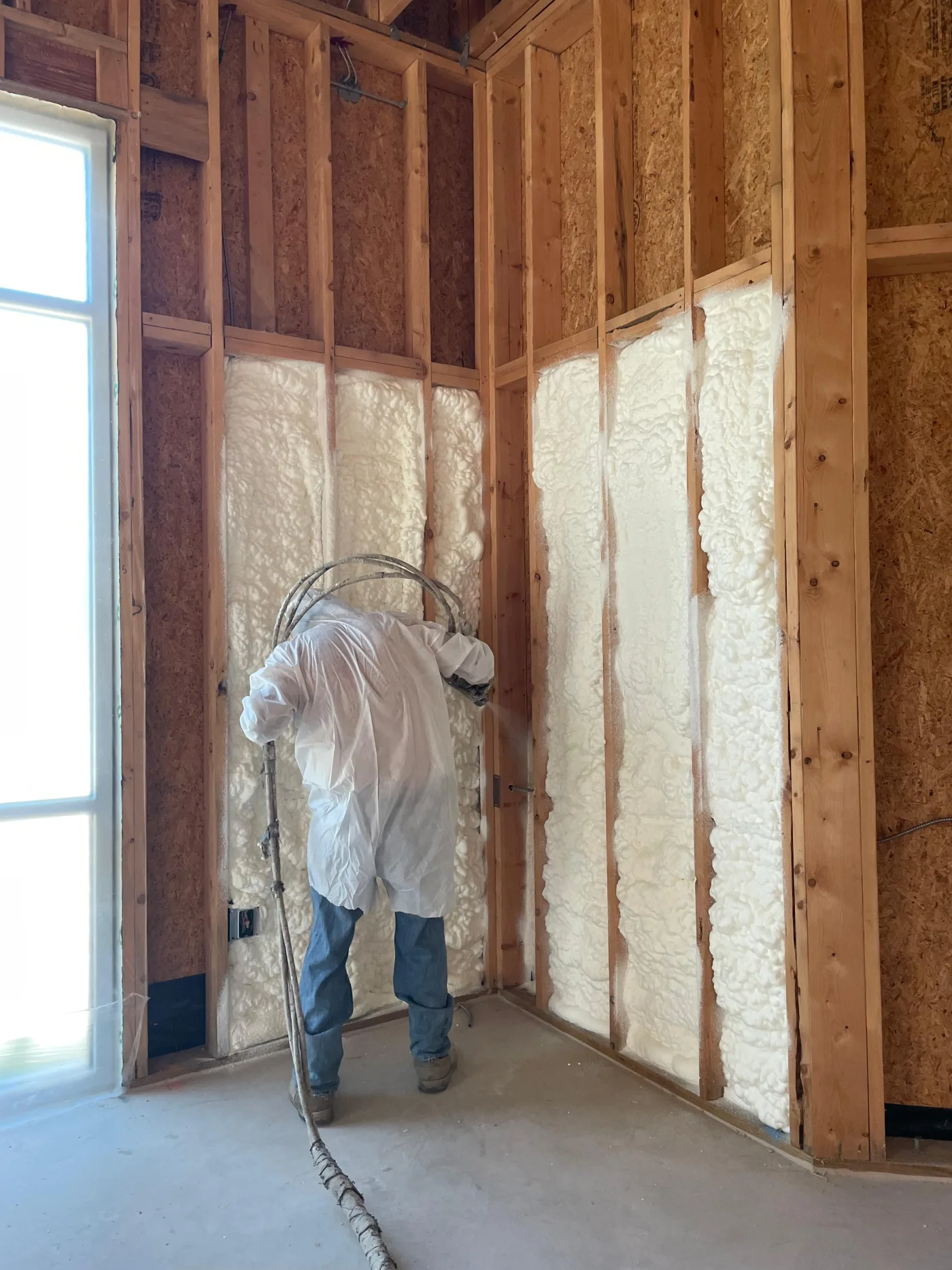
Spray Foam Insulation
Spray Foam vs. Rigid Foam in San Antonio: Which Fits Your Project?
Spray foam expands in place; rigid foam comes in boards. Compare access, air sealing, wall coverage, and project scope before choosing insulation for a San Antonio home.
Service Insights
Key facts that shape the recommendation.
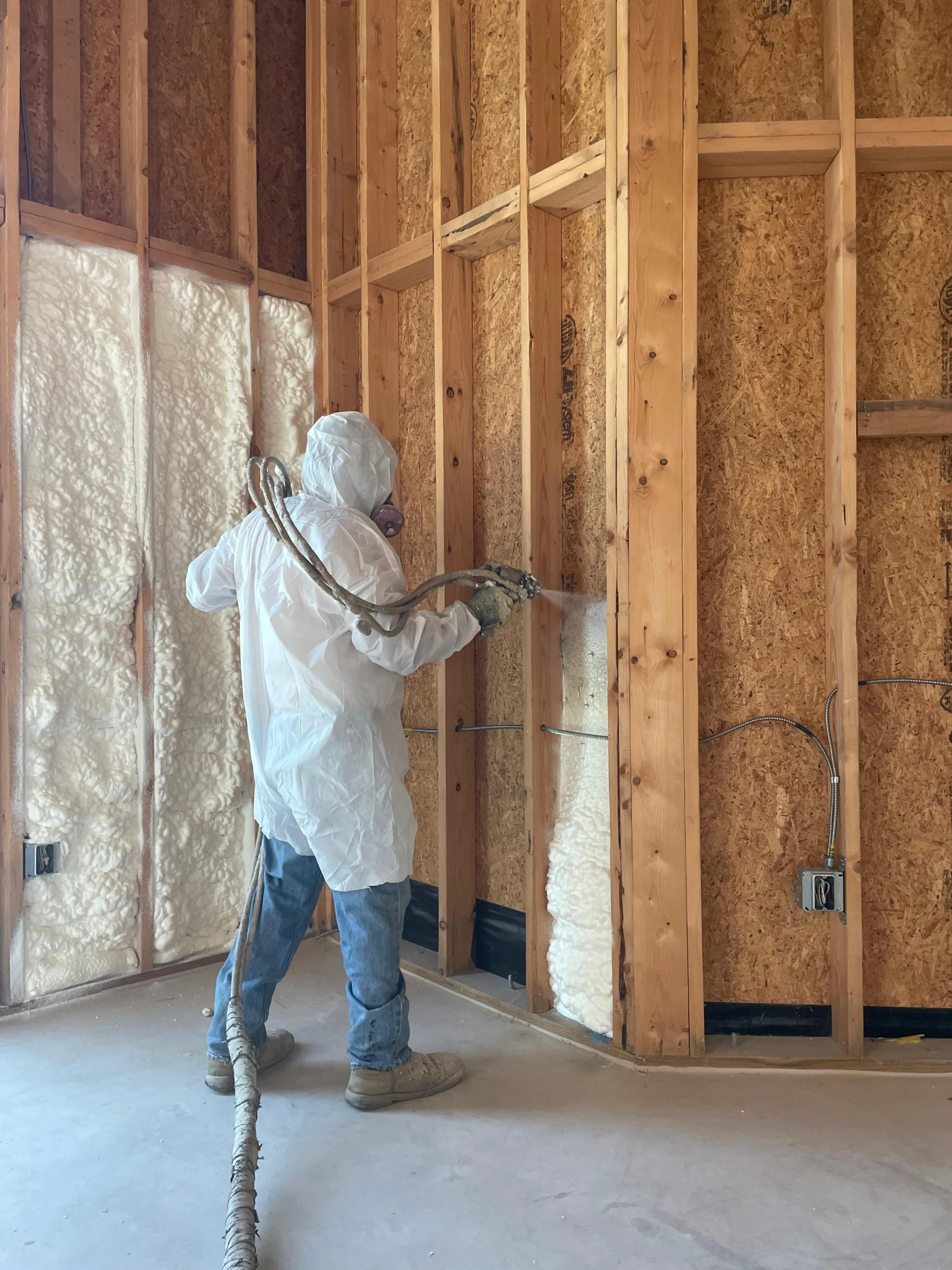
Spray foam is applied in place; rigid foam is manufactured in boards that must be fitted and joined.
Choose the insulated surface and access plan before comparing product prices or R-values.
Foam boards need detailed seams and edges; spray foam needs suitable surfaces and controlled installation.
A low attic floor may still be better suited to air sealing and blown-in insulation than either foam option.
Spray foam vs. rigid foam: the direct answer for homeowners
Spray foam and rigid foam are different forms of insulation, and neither wins every San Antonio project. Spray foam is applied to a surface and expands in place. Rigid foam arrives as boards that are cut, attached, and joined. The useful question is which system can form a complete insulation layer in the part of your house that needs work.
For example, a contractor may consider spray foam insulation for an accessible, irregular cavity or a planned roofline assembly. Rigid boards may be considered where a flat, continuous layer can be installed during construction or exterior renovation. That does not mean boards can be slipped into every finished wall, or that spray foam can be added anywhere without preparing the assembly.
In San Antonio heat, a product label alone cannot explain a hot bedroom or long HVAC runtime. The affected surface, existing insulation, air leaks, windows, and cooling distribution all influence comfort. A foam upgrade in one area will not automatically correct a separate duct or equipment problem.
Three terms help keep the comparison clear. R-value describes resistance to heat flow. An air barrier limits uncontrolled air movement. Continuous insulation extends across framing rather than stopping inside each cavity. Ask which of these jobs the proposed system will perform, and where its edges connect to the rest of the house.
Do not confuse a small can of gap-filling foam with a whole-home spray foam installation. A professional insulation scope includes the specified product, installed thickness, substrate preparation, access, and required protection. The price of one can or one board says very little about the completed project.
Compare the installed assembly, access, and air-sealing details
Start by asking the estimator to point out the proposed insulation boundary. Is it the attic floor, underside of the roof, an exterior wall cavity, or a continuous layer outside the framing? Those are different jobs. Moving insulation from an attic floor to a roofline changes the scope and should include an explanation of ventilation and equipment considerations.
- Accessible cavities: Spray foam can follow uneven surfaces, but the installer still needs access and appropriate surface conditions. Existing finishes or insulation may limit that access.
- Flat exterior surfaces: Rigid boards can provide a continuous layer when the wall is already being rebuilt. Window transitions, cladding attachment, and water management become part of the construction plan.
- Air control: Board seams, edges, and penetrations need a specified sealing approach. A spray foam installation also needs continuity at joints and transitions; expansion alone does not prove the entire boundary is sealed.
- Finished walls: Neither option removes the need to explain openings, patching, concealed obstructions, or finish restoration.
Also ask for the exact product. Open-cell and closed-cell spray foams are different, and rigid foam boards come in several formulations and facings. Their thickness, moisture behavior, and permitted applications vary. Compare the specified installed system instead of assuming all foam has one R-value per inch or the same drying characteristics.
The ENERGY STAR insulation-type guide distinguishes board insulation from sprayed and foamed-in-place products and lists different application settings. It is a useful starting point for vocabulary; the installer still needs to confirm what fits your particular assembly.
If the project is a wall retrofit, review wall insulation options before settling on a material. A homeowner in Leon Springs or NW San Antonio should receive an explanation of access and disruption alongside the product recommendation.
What to ask before approving a foam insulation estimate
Ask for a written scope that names the surface, approximate treated area, product, thickness or target R-value, preparation, and finish work. If one proposal covers a small wall and another covers the roofline, the total prices are not comparing the same result. Separate removal, installation, protection, and repairs so you can see why the totals differ.
For any foam product, ask what approved covering or other protection is required in that location. The answer should come from the product instructions and applicable requirements, rather than an assumption that all exposed foam is acceptable. For spray foam, obtain the installer's written ventilation and occupant return instructions for the specified product before scheduling.
Ask how completed work will be checked. Useful documentation can include photographs of accessible transitions before they are covered, confirmation of the product and installed thickness, and a record of areas that could not be reached. These details are more useful than a promise that one material will eliminate every comfort problem.
Keep the original complaint in view. If the attic floor is dry but underfilled, attic insulation with targeted air sealing may deserve consideration before a larger foam conversion. If only one wall needs attention, explain that limit when requesting proposals. You do not need to change the entire house to compare a focused repair.
After the work, compare comfort under reasonably similar weather and thermostat settings. Energy bills also reflect outdoor temperatures, occupancy, utility rates, and equipment use, so a single bill is not a clean measurement of insulation performance. No fixed savings percentage follows from the word foam.
Insulation Pros SATX provides spray foam, attic, and wall insulation services for San Antonio and surrounding service areas. Request a free estimate and describe the rooms, surfaces, and access involved. Ask which available service fits the home and whether any construction work needs a separate trade.
Expert Note
Get the scope before comparing the price
A board price and a spray foam installation price describe different amounts of work. Compare the same surface area, target performance, preparation, protection, and finish restoration.
Questions Answered
Straight answers before you book the estimate.
Spray foam is applied and expands in place. Rigid foam comes in boards that are cut, secured, and joined. Both need a complete installation plan for the assembly where they will be used.
A suitable board system can form part of an air barrier, but seams, edges, fasteners, and penetrations must be detailed appropriately. Placing loose boards against a surface does not establish a continuous air barrier.
No. Results depend on the treated surface, installed coverage, air leakage, existing insulation, and the rest of the home. A product name alone does not establish energy savings or payback.
Only after reviewing the whole attic plan. A dry, underfilled attic floor may be suited to air sealing and added insulation. A roofline foam project is a different scope with ventilation and equipment considerations.
Ask for the surface and area, exact product, installed thickness or target R-value, preparation, air-sealing details, required protection, access limitations, and responsibility for finish repairs.
Related Routes
Choose a service based on the area that needs work
Next Step
Find the right insulation scope for your San Antonio home
Tell Insulation Pros SATX which rooms feel uncomfortable and what areas are accessible. Request a free estimate or call (210) 239-2660.
Follow our insulation guides

Related Services
Book the service behind this article
If you are reading this because there is an active issue at home, these are the most relevant Insulation Pros SATX bookings to start with.
Keep Reading
Related Articles
Why Spray Foam Pulls Away From Roof Decking in San Antonio Attics
Bulverde Spray Foam Insulation: When a Roofline Plan Fits the Home
Canyon Lake Spray Foam Insulation: When Air Sealing Beats a Simple Top-Off
Need Professional Help?
Insulation Pros SATX helps homeowners across San Antonio, Bexar County, and nearby Central Texas communities with attic insulation, spray foam, blown-in insulation, radiant barrier, crawl space, and removal projects.