
Insulation Guides
Compressed Attic Insulation in San Antonio: When Flattened Material Needs Attention
Flattened insulation can leave a weak thermal layer even when the attic looks covered. Learn how to evaluate compression, compare repair options, and protect restored coverage.
Service Insights
Key facts that shape the recommendation.
Compression can reduce performance compared with the product at its intended installed thickness.
Flattening, normal settling, and displaced insulation need different evaluations.
Remove the source of compression before restoring coverage.
Use product instructions and actual coverage rather than guessing R-value from appearance.
Does compressed insulation still work?
Compressed attic insulation may still resist heat flow, but you should not assume it delivers the R-value printed for its original installed thickness. The practical answer is to check the product, actual thickness, and coverage before choosing a repair. A flattened area and a bare area are different conditions, and a single depth reading cannot describe the entire attic.
Compression means material has been squeezed into less space. It differs from normal settling of a loose-fill product and from insulation pushed aside during service work. All three can affect coverage, but the remedy depends on what happened. Look for the cause: stored belongings, boards resting on insulation, repeated foot traffic, or batts forced into a cavity that is too shallow.
In San Antonio heat, a weak section above an occupied room can contribute to unwanted heat gain and longer HVAC runtime. It does not prove that every comfort complaint comes from insulation. Duct leakage, solar exposure, thermostat operation, and equipment condition also deserve attention when a room is consistently warmer than the rest of the house.
The Building America heat-flow guide identifies compression alongside gaps, voids, and air-barrier misalignment as installation problems. For a homeowner, that means inspecting installation quality as well as the amount of material. Adding bags without understanding the existing layer can leave the original weakness unresolved.
What should an inspection record before recommending a top-off?
Ask for photographs showing the affected area and adjacent undisturbed coverage. A useful report identifies the insulation type, the extent of flattening, and whether the material is dry and clean. The contractor should distinguish observed conditions from assumptions about hidden layers. If the product cannot be identified, the estimate should explain that uncertainty instead of assigning a precise R-value by appearance.
For batt insulation, ask whether the installed thickness matches the space and the product instructions. For loose fill, ask about the product coverage chart, minimum thickness, and intended installed density. A generic inches-to-R-value conversion can be misleading because different materials and products need different thicknesses. Do not infer that twice the thickness automatically doubles the whole ceiling performance.
Where boards or a platform cover the insulation, ask whether the assembly leaves enough room for the planned thermal layer. The Building America attic-platform guide emphasizes avoiding compression under platforms. A platform also needs appropriate structural support; insulation is not a load-bearing surface. Have access and support details evaluated before moving or rebuilding a platform.
Homeowners in Leon Springs and NW San Antonio can use an attic insulation evaluation to connect these findings to the rooms below. Report where people or trades have recently worked and whether comfort changed afterward. Stay out of tight or unsafe attic areas; inspection photos should provide the information without requiring you to walk on ceiling framing.
Should flattened insulation be restored, replaced, or covered?
The scope should first remove the reason the insulation is being compressed. Restoring coverage under the same heavy boards or boxes is unlikely to remain effective. Where continued equipment access is needed, plan an appropriate walkway or access detail that protects the thermal layer and preserves ventilation, required clearances, and service access.
Dry, serviceable material may be reusable where the product and condition allow. Permanently deformed batts, contaminated material, or wet sections may need a different scope. Do not assume fluffing any product by hand restores its rated performance. Ask the contractor to explain whether the proposed repair follows the product instructions and how repaired areas will be checked.
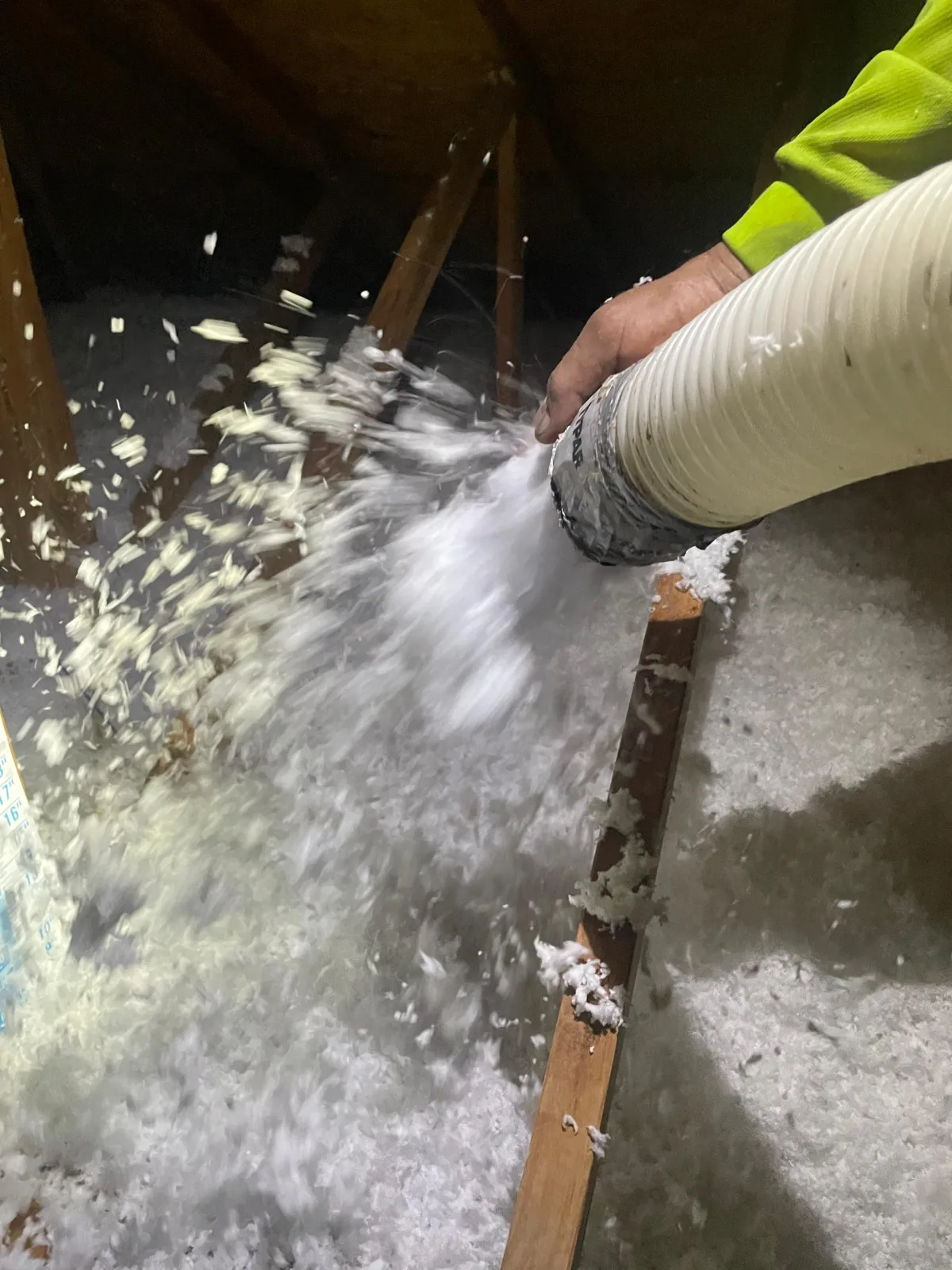
An appropriate blown-in insulation top-off may improve an existing attic, but the proposal should state the preparation, target R-value, and coverage requirements. If an accessible ceiling air leak is present, discuss air sealing before covering it. A top-off should not conceal a moisture problem or substitute for repairing an unsafe condition.
At handoff, request photos of the corrected area, product identification, and records of the installed coverage. Keep the access route clear and tell future service workers where insulation needs protection. Compare comfort and energy bills under similar weather and usage conditions afterward; a repair cannot guarantee a particular savings percentage. Request a free estimate with the affected room and any available attic photos.
Expert Note
Protect the repaired layer
Before approving the work, ask how future service access will avoid compressing the same insulation again.
Questions Answered
Straight answers before you book the estimate.
No. It may still resist heat flow, but its performance should not be assumed to match its original rated thickness. Product information and installed conditions matter.
No. Compression involves squeezing material into less space; settling is a change in loose-fill depth over time. Displacement leaves material pushed away from its intended location.
Do not assume this is suitable. A supported access or storage platform needs an assembly that accommodates insulation without crushing it and meets structural and service-access requirements.
Not necessarily. The extent, material condition, product instructions, and reason for compression determine whether targeted restoration, replacement, or additional insulation is appropriate.
Correcting a weak thermal layer may help reduce heat transfer, but savings depend on weather, HVAC performance, air leakage, and household use. A specific bill reduction cannot be promised.
Related Routes
Plan the right insulation improvement
Next Step
Get a clear insulation plan for your San Antonio home
Tell Insulation Pros SATX about your comfort concerns in San Antonio, Leon Springs, or Bexar County. Call (210) 239-2660 or request a free estimate.
Follow our insulation guides

Related Services
Book the service behind this article
If you are reading this because there is an active issue at home, these are the most relevant Insulation Pros SATX bookings to start with.
Keep Reading
Related Articles
Replacing Siding in San Antonio? When to Add Exterior Wall Insulation
Cantilevered Floor Insulation: Why Your San Antonio Bay Window Feels Drafty
Does Spray Foam Need a Thermal Barrier? A San Antonio Homeowner Guide
Need Professional Help?
Insulation Pros SATX helps homeowners across San Antonio, Bexar County, and nearby Central Texas communities with attic insulation, spray foam, blown-in insulation, radiant barrier, crawl space, and removal projects.